
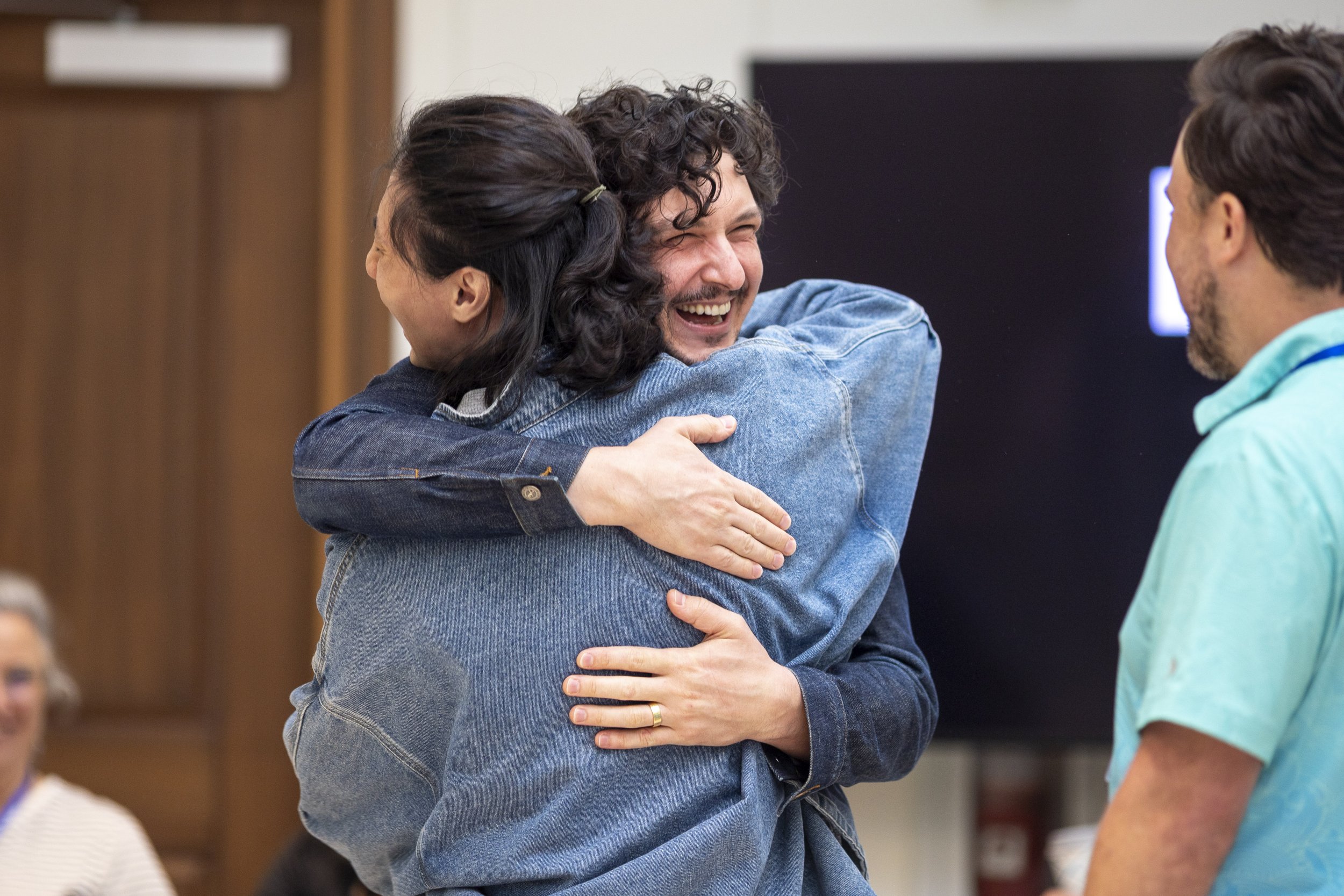
2027 Men’s Group
➤ Location: In Person at the Virginia M. Satir Center (Chapel Hill, NC)
➤ Facilitator: Reiss Powell
➤ Schedule: Tuesdays, 3:00–5:00 PM ET | February 9 – December 14, 2027
➤ Format: Meets twice monthly | 20 total sessions
The Men's Group is a year-long, in-person space for men to slow down, speak honestly, and be met by other men doing the same. Using the Satir Growth Model, the group works with what's underneath the surface — the patterns, roles, and old rules that shape how you show up at work, at home, and with yourself. You don't need therapy experience or a background in Satir's work to belong here. You just need to be willing to show up.
Facilitated by Reiss Powell, the group meets twice monthly at the Virginia M. Satir Center in Chapel Hill, NC. Sessions are experiential rather than lecture-based — expect real dialogue, real feedback, and the kind of steady, ongoing relationships that make change possible over time.
Schedule
The group meets in person on the following Tuesdays from 3:00–5:00 PM ET:
February 9 & 23
March 9 & 23
April 13 & 27
May 11 & 25
June 15 & 29
July 13 & 27
August 10 & 24
September 14 & 28
October 12 & 26
November 23
December 14
Cost & Payment Options
The full year’s cost is $2,000, which equates to $100 per session for 20 in-person meetings. Participation is a year-long commitment.
Choose your preferred payment option below:
Pay in Full – $2,000 (one-time payment)
Quarterly Plan – $500 per quarter (4 total payments)
Monthly Plan – $185 per month (12 payments; includes a minor surcharge)
The first payment is due upon acceptance into the group.
Minimum Participant Number:
This group requires a minimum number of participants to run. If that minimum isn't met, you'll be refunded in full.
Facilitator
Reiss Powell, LCSW, LCAS
Reiss Powell is a Licensed Clinical Social Worker and Licensed Clinical Addictions Specialist who earned his Master of Social Work from the UNC School of Social Work in 2013. He began studying the Satir Growth Model in 2012, completing 144 hours of formal training with Jean McLendon and Regina Taggart, and is a current member of the Virginia M. Satir Center's Legacy Program.
In private practice, Reiss specializes in addiction treatment and clinical work with adolescents and young adults, approaching his work through an existential and humanistic lens. That same grounded, direct presence carries into this group — Reiss brings authenticity, warmth, and humor to the room, and a steady comfort with the parts of men's lives that are harder to say out loud: the patterns we default to, the pressure to have it together, and what's underneath both.