
Dismantling Systemic Oppression: A Satir Lens
Join us for a Satir-based exploration of systemic oppression. Two days of learning, practice, and honest conversation, with the Satir Growth Model as our guide.

Context is more than the situation alone
What shapes the context we're in?
When we talk about context in the Satir Growth Model's self-other-context, we usually talk about the situation. Often overlooked are the threads woven through it: society, culture, upbringing, and systems like racism. Our own proximity to power, and that of others, is one of those threads.
The more we understand both, the more effective we can be in building connections, and ultimately in creating an environment where everyone has the safety and opportunities to be their biggest and most authentic selves.
New to this work? You are welcome here.
This is a gentle, practical place to begin, whether you work in a clinic, lead a team, or simply care about the people around you.
Two days to examine what you carry, and what becomes possible when you meet it with awareness.
Many of us learned to talk about oppression before we learned to look at how it lives in us: in our families, our nervous systems, and the stories we inherited without choosing them. This training starts there.
Using Virginia Satir's models, including family of origin work, the Iceberg, congruence, and the change process, you'll explore your own history as the starting point, not a footnote. There's no need to arrive fluent, and no one is evaluating you. It's a container built for honest, sometimes clumsy, always human exploration.
When
April 23–24, 2027
Friday and Saturday, 9:00 AM to 6:00 PM
Where
Sancar Turkish Cultural Center
1609 East Franklin Street, Chapel Hill, NC 27514
Cost
$350
Financial aid is available based on need.
Credit
NBCC eligible
In person, both days.
What you'll take with you
You'll leave with
- An understanding of how systemic oppression develops over time and shows up personally, relationally, and across generations.
- Satir-based family systems tools for staying present and congruent in hard conversations about race, identity, and power.
- A clearer picture of your own family patterns around difference, silence, and injustice.
- Language and frameworks you can use in clinical, organizational, and personal relationships.
How the two days work
Learning you can feel and use
The training mixes presentations with experiential work: small groups, family mapping, body-based practice such as sculpting, and time for reflection and mindfulness. Everyone takes part, and you decide how much you share.
What we'll explore
Starting with the family, widening to the world
The origins of systemic oppression and how it becomes part of our institutions.
How Satir's family systems model connects with trauma, identity, and generational patterns.
Your own family history, and who modeled how to respond to injustice.
How generational trauma shows up in the body and in our relationships.
Tools for staying grounded and effective.
A case study of one community's experience with systemic harm, and its recovery.
Why a Satir lens
What makes this training different
Tools, not just awareness
You leave with skills you can use, not only information.
A space built for honesty
You don't need polished language, and you can learn without fear of getting it wrong.
Satir as the foundation
The Satir Change Process, the SEED model, and family-of-origin mapping, applied to how oppression is passed on and how it can be interrupted.
Your facilitators
Learn with Lutricia Callair and Nyra Hill
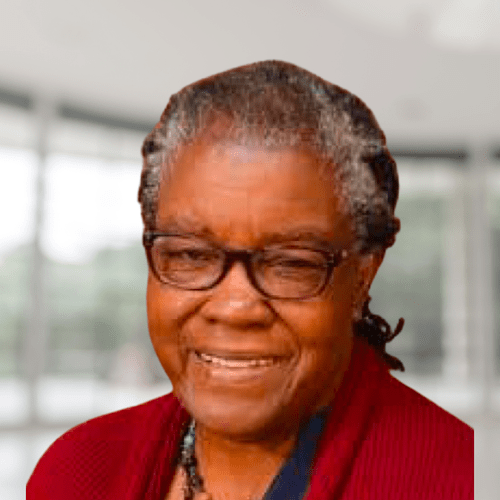
Lutricia Callair, LCSW
Clinical social worker and Satir practitioner
Lutricia has worked with children and families in crisis for over 40 years. She began civil rights work at 14, trained in nonviolent civil disobedience, and served on the NAACP's Roy Wilkins Youth Council. She hosts the podcast BEI (Bigotry, Exclusion, & Ignorance) and chairs the Umoja Committee of the Virginia M. Satir Center.
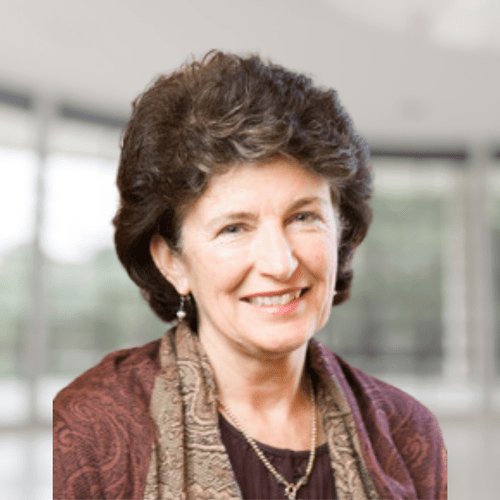
Nyra Hill
Clinical social worker and Restorative Justice facilitator
Nyra has been a clinical social worker in mental health for more than 40 years. The Satir model has informed her work on well-being and empowerment, particularly with marginalized individuals and communities. She is also a Restorative Justice facilitator, offering listening, inclusion, and accountability as an alternative for people involved in the criminal justice system, and she is a member of the Umoja committee at the Virginia M. Satir Center.
Want to join but need support?
Financial aid is available. Apply here.
Before you register or book travel
This training has a minimum enrollment.
If we don't reach the minimum
If we haven't reached the minimum 60 days before the training, we cancel it and everyone is fully refunded. We suggest waiting until then to book non-refundable travel.
If your plans change
Registrations are final and not refundable.
VMSC programs are educational and experiential. They are not therapy or counseling, and facilitators do not act as your therapist. If you are working with a therapist or other mental health provider, please check with them that this program is appropriate for you at this time. You decide how much to share and can step out at any point. Many participants apply this work in their own practice, and you are responsible for how you use what you learn. Read What to Expect.